
Concrete Foundations & Slabs in Fulshear, TX
Churchill Concrete builds foundations, slabs, and structural concrete for homes and businesses throughout Fulshear and the surrounding area, including Katy, Richmond, Rosenberg, Sugar Land, Simonton, and Brookshire.
Nobody throws a housewarming party for a foundation. There is no ribbon cutting, no group photo, no proud post on the neighborhood app. And yet everything else in your life, literally, sits on top of this one part of the house that gets zero credit. Walls stay straight because of it. Doors close without sticking because of it. Your kitchen floor stays level enough that a dropped marble does not roll into the living room on its own. A foundation is the quietest, least appreciated hero on the property, and it deserves a little attention before something goes wrong, not after.
This page is about the part of the job most people never see once the grass grows back over it, and why doing it right the first time matters so much more here than in a lot of other places.
Why Clay Soil Changes Everything About Foundation Work
If you want to understand why foundation work in this region looks different than it does in, say, the mountains of Colorado or the sandy coast of Florida, you need to understand the ground underneath Fulshear. A lot of it is clay, and clay behaves less like solid rock and more like a very slow, very stubborn sponge. It swells when it soaks up water, and it shrinks when it dries out, and that movement can add up to several inches of change across a single year, depending on rainfall and season.
Picture a house sitting on a slab of concrete that rests on soil doing this expand-and-contract routine month after month. If the soil moves unevenly, the slab can move unevenly with it, and that is where cracked walls, sticking doors, and uneven floors come from.
This is not a defect unique to bad builders or cheap houses. It is simply the reality of building on expansive clay, and the entire foundation design process exists to manage it rather than pretend it is not happening.
That is why a foundation poured in Fulshear shouldn’t look like a foundation poured somewhere with stable, sandy, well-draining soil. Local foundations typically use a slab-on-grade design with a thickened edge beam running around the perimeter, extending deeper into the ground than the rest of the slab to resist that seasonal soil movement. Many homes also use post-tension cables, which are steel cables threaded through the slab and tightened after the concrete has gained enough strength, squeezing the whole slab together under compression so it resists cracking under the stress that shifting soil puts on it.
What Actually Happens Before the Truck Shows Up
Here’s a secret that nobody in the concrete business really keeps secret, because it’s not exactly thrilling dinner conversation: the pour itself is often the fastest and least important looking part of a foundation job. The real work happens in the days before the truck ever arrives and skipping steps here is exactly how a foundation ends up in trouble five or ten years down the road.
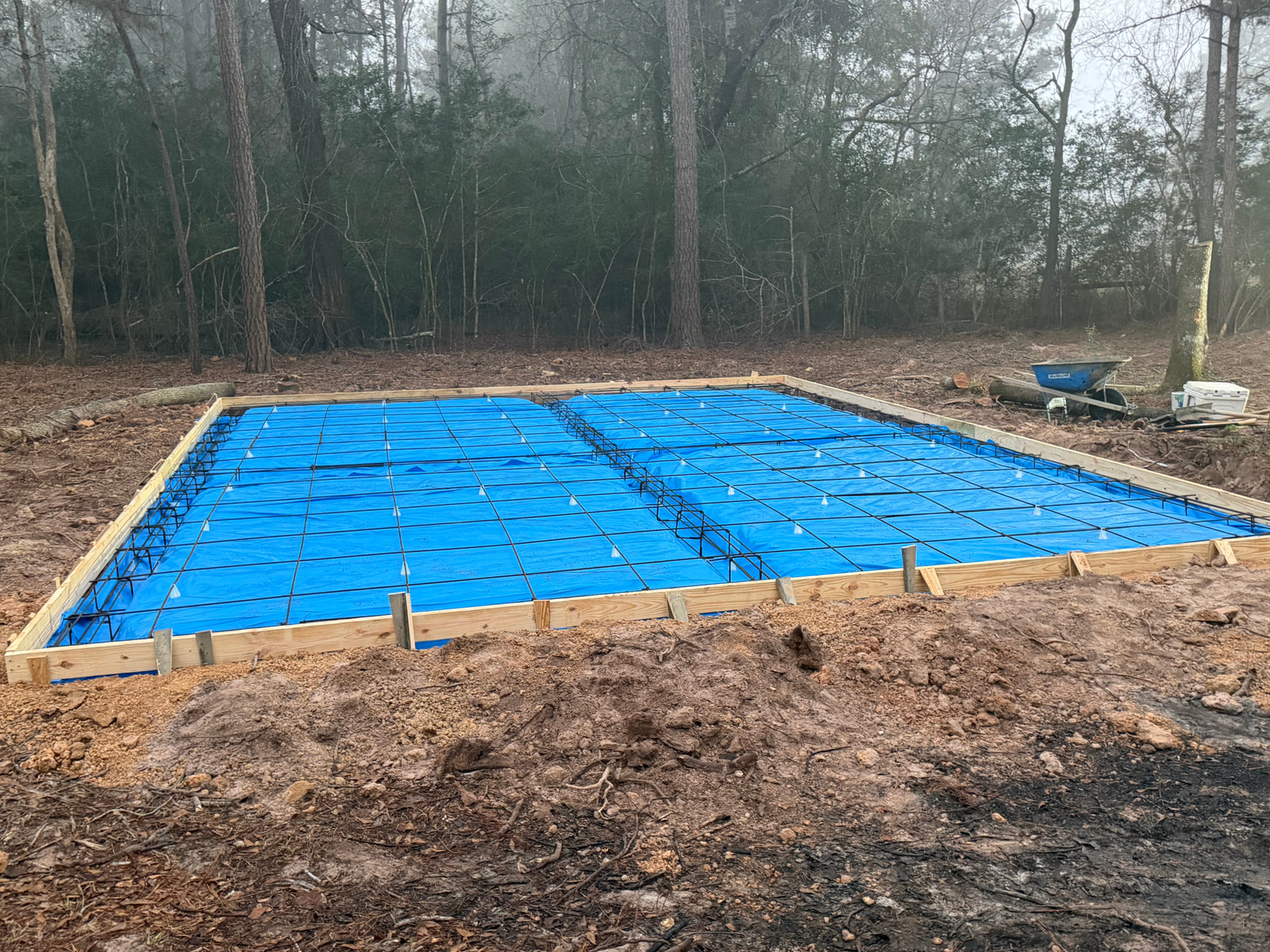
It starts with clearing and grading the site, followed by excavation to the correct depth for the footings and beams. Loose or soft soil gets removed and the base gets compacted, often with mechanical equipment that packs the soil down to a specific density, because a slab poured over loosely packed dirt is basically a slab poured over a future problem. A moisture barrier, usually a heavy plastic sheet, goes down next to stop ground moisture from wicking up through the slab and into your future flooring.
Then comes the steel. If the design calls for a rebar grid or post-tension cables, that reinforcement gets placed at a precise height within the slab, not just tossed on the ground and covered. Steel sitting too low or too high does not do its job properly, so we check placement before a single truck gets called. Plumbing lines, electrical conduit, and anything else that needs to run under the slab gets installed and pressure-tested at this stage too, since once the concrete goes down, those lines become extremely inconvenient to reach. Only after all of that is inspected and confirmed does the pour actually happen, and by comparison, the pour itself can feel almost anticlimactic. That is exactly how it should feel. Excitement during a foundation pour usually means something went wrong.
Beyond the House: A Slab for Everything Else on Your Property
A foundation holds up a house, but slabs show up all over a property, and each one has its own small set of requirements. Garage floors and detached garage slabs need to handle vehicle weight, so they generally follow driveway-style thickness and reinforcement rather than the lighter standards used for a patio. Workshop and barn slabs, common on the larger lots out toward Simonton and Brookshire, often need to support heavy equipment, welding stations, or vehicle lifts, which pushes the design closer to a light commercial specification than a typical residential one.
Home additions bring their own wrinkle, since a new slab has to tie into an existing one without creating a weak seam where the two meet. We use steel dowels drilled into the old slab and set into the new pour so both sections move together as one unit instead of separating over time, which is exactly the kind of detail that saves a homeowner from a visible crack running straight through their new sunroom five years later.
Then there are the smaller slabs that rarely get mentioned but matter just as much: pads for backup generators, outdoor AC units, and pool equipment. These need to be level, properly sized, and often slightly elevated to avoid standing water, since generators and electrical equipment do not particularly enjoy sitting in a puddle after a Gulf Coast downpour. Sheds and outdoor kitchen slabs round out the list, and while they are smaller in scope, they still need the same basic ingredients: a compacted base, correct thickness, and joints placed where they belong.
Reading the Warning Signs: When Foundations Need Attention
Most foundation problems do not announce themselves with a dramatic crack across the living room floor. They show up quietly, in small details that are easy to write off as “just an old house thing.” Doors and windows that stick or no longer latch properly, especially if the problem is new, can point to slight shifting somewhere in the slab beneath them. Cracks in interior drywall, particularly ones that run diagonally from the corner of a door or window frame, are worth watching, since that stress pattern often traces back to movement below.
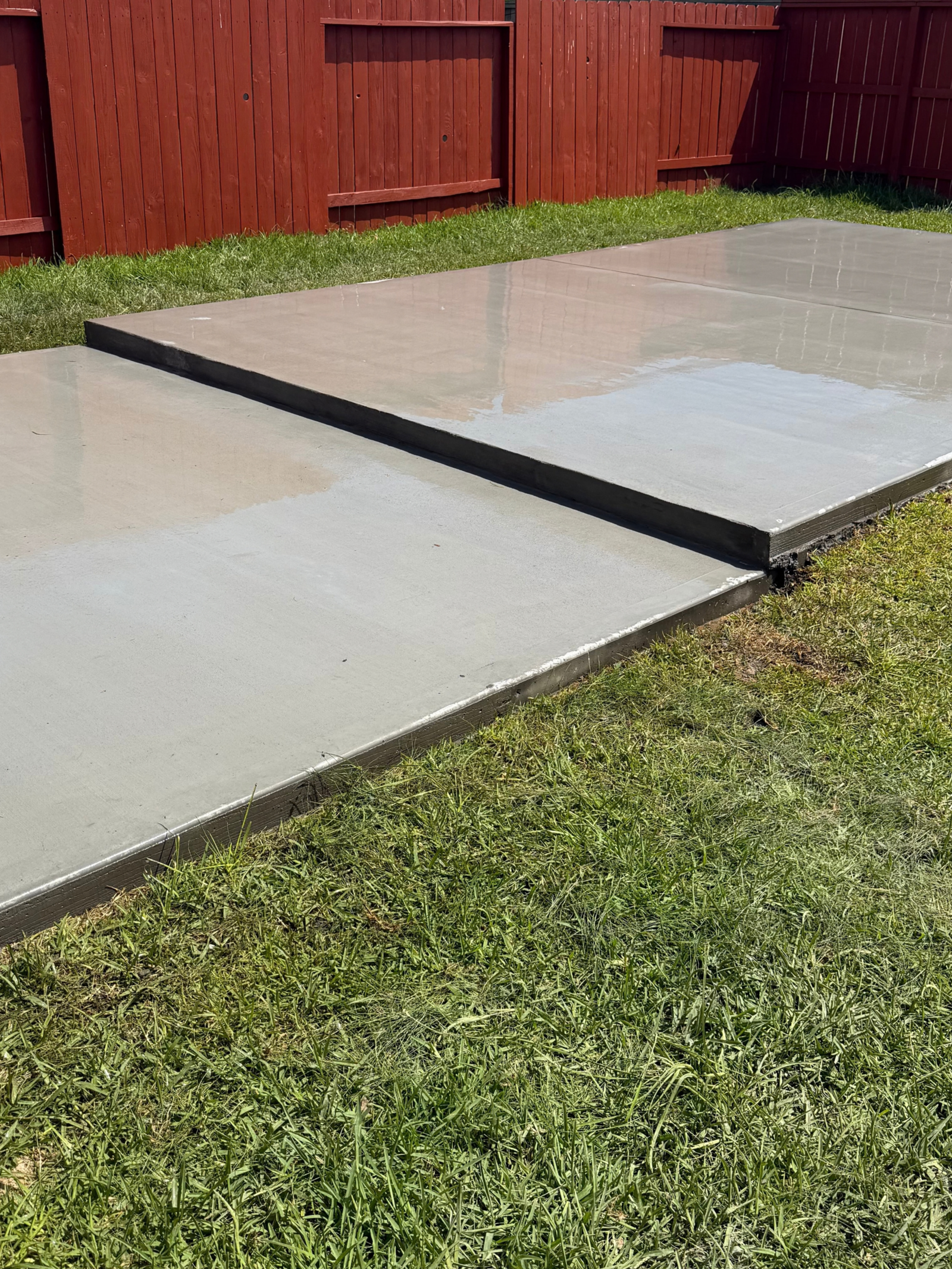
Outside, look at the slab itself where it is visible, along the base of the house or around a garage. Cracks wider than about a quarter inch, or a crack where one side sits noticeably higher than the other, generally deserve a professional look rather than a shrug.
Uneven floors are trickier to catch by eye, but a simple test with a marble or a round object can reveal a surprising amount, since a floor that used to be level and now sends a marble rolling toward one corner of the room is telling you something.
None of this means every hairline crack signals disaster. Concrete shrinks slightly as it cures, and small surface cracks are common and rarely serious. The difference between normal and concerning usually comes down to width, direction, and whether the crack is actively getting worse. When in doubt, an inspection costs far less than ignoring a real problem until it becomes an expensive one.
Keeping a Good Foundation Good from a Great Concrete Company
The single biggest favor you can do for a foundation on clay soil is keeping the moisture around it as consistent as possible, since dramatic swings from soaking wet to bone dry are what cause the most movement. During long dry stretches, especially in the peak of a Texas summer, watering the soil around the perimeter of the house with a soaker hose helps keep the clay from shrinking away from the foundation and pulling moisture out from underneath it. Gutters and downspouts matter more than most homeowners realize, too, since water dumped in one spot near the foundation, pour after pour, creates exactly the kind of uneven moisture that leads to problems.
Trees deserve a mention here as well, mostly because their root systems are far more ambitious than their branches suggest. A large tree’s roots can extend well beyond the edge of its canopy, actively pulling moisture from the soil and sometimes from underneath a nearby slab, which is one more reason foundation-friendly landscaping matters more here than in places with less reactive soil. None of this requires obsessive monitoring. A quick seasonal walk around the perimeter, paying attention to drainage, watering, and anything that looks different from six months ago, catches most problems long before they become expensive ones.
Commercial Slabs: A Different Kind of Weight to Carry
Foundation and slab work for a business follows the same core principles as residential work, but the numbers involved are usually bigger. A parking lot or loading area has to handle repeated heavy vehicle traffic, and delivery trucks put dramatically more stress on pavement than passenger cars do, which is why commercial slabs and drive lanes are typically poured thicker and with a higher strength mix, often in the 4,000 to 5,000 PSI range compared to roughly 3,000 to 4,000 PSI for many residential jobs. Interior floor slabs for retail spaces, restaurants, or warehouses also need to account for point loads from shelving, equipment, or foot traffic patterns that a home slab never has to consider.
Timing tends to matter more for commercial clients too, since a business often cannot simply close for a week while a slab cures. We plan phased pours and realistic scheduling around a business’s actual operating needs, whether that is a shop near the growing retail corridor along FM 1093 or a warehouse pad out near the rail lines in Rosenberg, so the finished slab meets code and the business does not lose more time than necessary getting there.
Serving Fulshear and the Surrounding Communities
Our foundation and slab work covers Fulshear itself, including newer developments like Cross Creek Ranch, Jordan Ranch, and Tamarron, where many homes are still well within their first decade and benefit from proactive drainage and moisture management rather than reactive repair. We also handle projects out toward Katy and Cinco Ranch, where a mix of home ages means everything from new home additions to slab repairs on older properties.
Get a Foundation That Does Its Job Quietly for Decades
Toward Richmond and Pecan Grove, near George Ranch Historical Park, older homes sometimes need slab repair or careful addition work that respects decades of settling that has already happened.
We also serve Rosenberg, Sugar Land, and the wider communities of Simonton and Brookshire, where larger properties often call for substantial outbuilding slabs, from full workshop floors to barn pads built to hold up a tractor.
A good foundation is the one part of your property you should never have to think about, which is exactly the point.
Churchill Concrete builds foundations and slabs the way this soil and this climate actually require, not the way it might be done somewhere with easier ground underneath.
From a full home foundation to a small equipment pad in the backyard, we bring the same careful prep work and honest advice to every job.
Call Churchill Concrete today at (281) 201-0262 or request your free evaluation online.
We proudly serve Fulshear, Katy, Richmond, Rosenberg, Sugar Land, Simonton, Brookshire, and the surrounding area.
Complete This for Your Free Estimate!
Common Questions from Customers
Small hairline cracks from normal curing shrinkage are common and usually not a concern. Cracks wider than about a quarter inch, cracks that are actively growing, or ones paired with sticking doors and uneven floors are worth having evaluated by a professional rather than ignored.
Yes, when it is done correctly. We tie new slab sections into existing concrete using steel dowels, which allows both sections to move together as a single unit instead of separating at the seam over time.